The Difference Between Using More Tools and Working Better

When a team has a problem, the first instinct can be to find another tool.
Need better project management? Add a project management platform.
Need better communication? Add another communication tool.
Need somewhere to store files? Add another cloud storage service.
Need better documentation? Add a knowledge management tool.
Before long, a team can be using 10, 20, or even more applications every day.
The tools themselves aren't necessarily the problem.
The real question is:
Are all these tools helping your team work better, or are they simply giving your team more places to work?
More Tools Don't Always Mean Better Work
Modern software gives teams incredible capabilities.
But every new tool can also introduce another:
-
Login
-
Interface
-
Notification system
-
Search experience
-
Folder structure
-
Workflow
-
Set of rules
The more tools a team uses, the more effort may be required to move between them.
An agency employee, for example, might start with a client in Slack, look for a file in Google Drive, check a task in Asana, open a design in Figma, review an email, and then return to Slack.
The work may be straightforward.
The workflow isn't.
The Real Problem Is Fragmentation
Imagine an agency managing several client brands.
The client's brand assets are in Google Drive.
The brand guidelines are in Dropbox.
Project tasks are in Asana.
Important links are saved in a spreadsheet.
Client instructions are in Slack.
Previous decisions are buried in email.
Every piece of information exists somewhere.
But the team still has to search for the connections between them.
This is where adding another tool may not solve the underlying problem.
You don't always need another place to store information.
You may need a better way to organize and connect the information you already have.
Tools Should Reduce Friction
A useful tool should make work easier.
It should help your team:
Find things faster
Understand what matters
Collaborate more easily
Repeat processes consistently
Spend more time on valuable work
When software creates more complexity than it removes, it becomes another layer your team has to manage.
That doesn't mean the tool is bad.
It may simply mean it isn't solving the right problem.
The Difference Between More Tools and Better Work
Consider these two approaches.
Adding More Tools
A team discovers a problem and adds another application.
Then another.
Then another.
Eventually, employees have to remember which tool handles which part of the workflow.
Improving the Workflow
A team first identifies where work is getting stuck.
Then it simplifies the process, removes unnecessary steps, organizes information, and connects the tools that are genuinely useful.
The second approach may involve fewer changes—and produce a better experience.
The goal isn't to have fewer applications for the sake of having fewer applications.
The goal is to have less friction between people and the work they need to do.
More Tools Can Create More Searching
One of the biggest hidden costs of a large software stack is information retrieval.
Your team may know that something exists without knowing where it exists.
A client logo could be in a cloud folder.
A final presentation could be in an email attachment.
The latest client instruction could be in a chat.
A useful link could be in someone's bookmarks.
This creates a simple but expensive question:
“Where is it?”
A well-organized digital environment should make that question easier to answer.
Centralization Doesn't Mean Replacing Everything
Working better doesn't mean your team needs to throw away its existing tools.
Your designers can keep using Figma.
Your project managers can keep using Asana.
Your team can continue using Google Workspace, Slack, Microsoft Teams, Dropbox, or other specialized platforms.
The important thing is to create a clear structure around them.
Think of it as:
Specialized tools → do the work
Centralized workspace → organizes the work around them
This gives your team a clear starting point without forcing every activity into one application.
Choose Tools Based on the Problem
Before adding another tool, ask a few simple questions:
What problem are we actually trying to solve?
Do we already have a tool that can solve part of it?
Will this make information easier to find?
Will it simplify the workflow or add another layer?
Where will the new information live?
These questions can prevent your software stack from growing faster than your team's ability to manage it.
Better Work Starts With Better Organization
Productivity isn't simply about how many applications your team has.
It is about how easily your team can move from:
Information → Context → Action
The best workflow lets people find what they need, understand what they're looking at, and move forward without unnecessary searching or switching.
That is why organization matters just as much as functionality.
How Awolan Fits In
Awolan is designed for teams and agencies managing client brands.
Agencies already use many specialized tools. Awolan doesn't need to replace all of them.
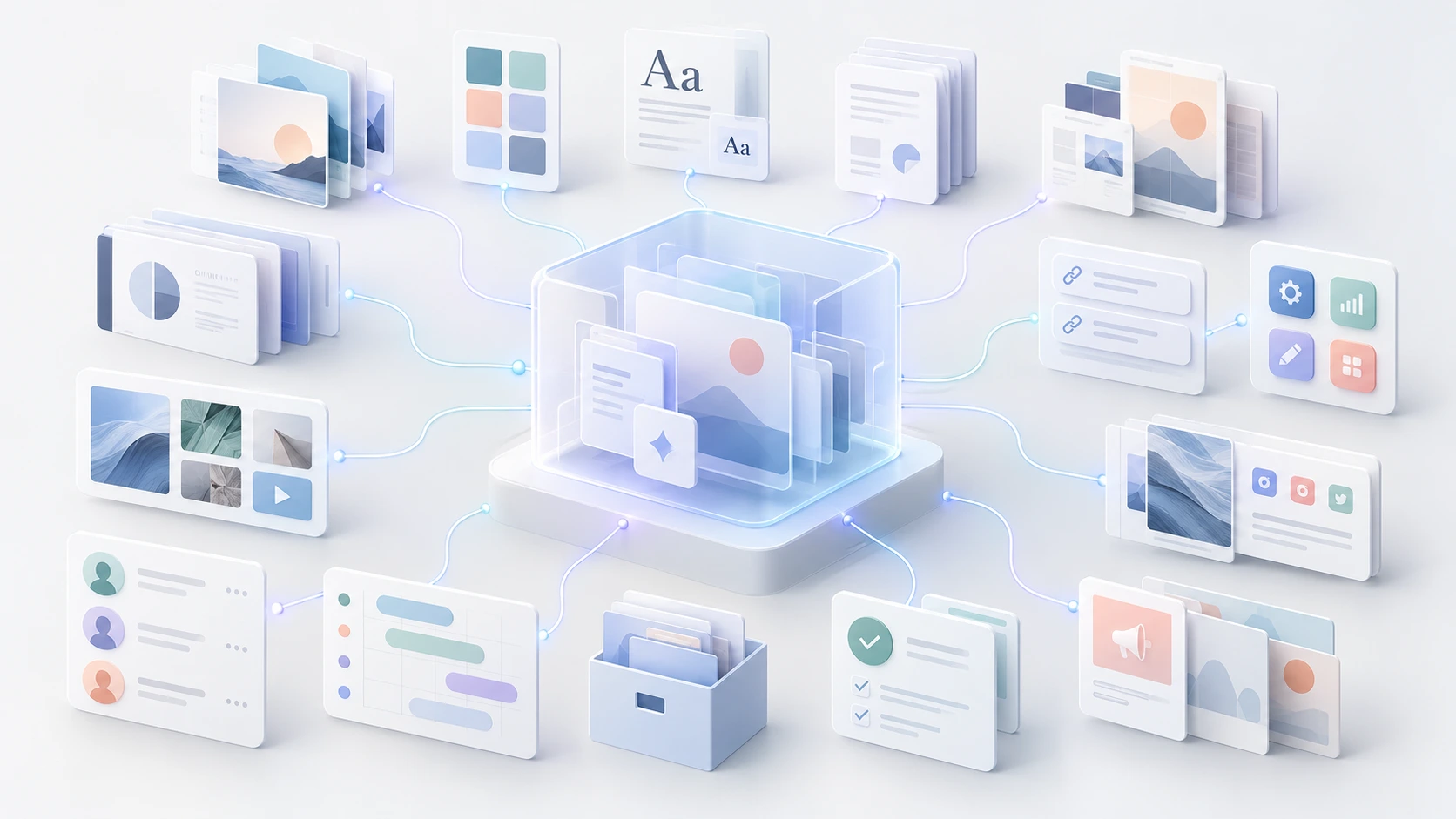
Instead, it provides a centralized workspace for the information surrounding each client brand—including brand assets, documents, links, and digital tools.
So instead of remembering where every part of a client lives, your team can start with the client brand and access the resources connected to it.
You don't necessarily need more tools.
You may simply need a better place to organize the ones you already use.
Work Better, Not Just With More Software
More software can give your team more capabilities.
But better work comes from reducing unnecessary complexity, creating clear systems, and making important information easier to access.
The goal isn't to build the biggest software stack.
It's to build a workflow that helps your team work.