How Agencies Can Reduce Time Spent Searching for Files

For agencies, finding a file should be easy.
But when you're managing multiple clients, campaigns, designers, freelancers, and projects, a simple request like “Can you send me the latest logo?” can turn into a frustrating search through folders, emails, Slack messages, and cloud storage.
The files usually exist.
The problem is finding the right one quickly.
For agencies, reducing the time spent searching for files isn't just about productivity. It can improve collaboration, client service, and the overall way your team works.
Here are some practical ways to make your agency's files easier to find.
1. Create a Standard Structure for Every Client
One of the easiest ways to reduce file search time is to use a consistent structure for every client.
For example:
Client Brand
→ Brand Assets
→ Brand Guidelines
→ Documents
→ Campaigns
→ Templates
→ Reports
→ Important Links
When every client follows the same structure, your team doesn't need to remember where each agency account stores its files.
You simply know where to look.
2. Separate Brand Assets From Project Files
Not every file has the same purpose.
Your client's primary logo, brand colors, fonts, and guidelines may be used across dozens of projects. A campaign's social media graphics, on the other hand, may only be relevant to one project.
Keeping core brand assets separate from project-specific files makes both easier to find.
For example:
Brand Assets
Logos · Fonts · Colors · Photography · Guidelines
Campaign: Summer 2026
Social Posts · Ads · Landing Pages · Reports
This prevents important brand resources from disappearing inside old project folders.
3. Establish a Single Source of Truth
One of the biggest causes of wasted time is having multiple versions of the same file.
You might see:
logo-final.png
logo-final-2.png
logo-final-new.png
logo-final-latest.png
Instead of relying on filenames to communicate which file is correct, establish one official source of truth for each client's brand assets.
Your team should know:
“When I need the current logo, this is where I go.”
That simple rule can eliminate a surprising amount of unnecessary searching.
4. Use Clear and Consistent File Names
File names should help people identify what they're looking at immediately.
Compare:
final2new.png
with:
acme_logo_primary_white.svg
The second filename tells you:
-
Client
-
Asset
-
Type
You don't need an overly complicated naming convention. You simply need one that your whole team follows.
5. Stop Using Chat as Your File Storage System
Slack, Teams, and email are useful for discussing files.
They're not always good places to store and manage the final version of those files.
A designer might send a presentation in Slack. Someone downloads it. A revised version is emailed later. Another version ends up in Google Drive.
Now your team has three possible locations.
Use conversations to discuss work, but keep the authoritative file in a clearly defined location.
6. Make Frequently Used Information Easy to Access
Some resources are requested constantly.
For example:
-
Logo files
-
Brand guidelines
-
Color palettes
-
Fonts
-
Client websites
-
Social media profiles
-
Marketing platforms
-
Templates
Don't make your team search for these every time.
Create a visible, easily accessible place for frequently used brand resources.
The less effort required to access common assets, the less time your team spends searching.
7. Organize Information Around the Client Brand
Agencies don't just manage files.
They manage client brands.
A client's logo may be related to their brand guidelines. Their guidelines may be related to their website. Their website may connect to analytics, social media, advertising platforms, and other tools.
Organizing everything around the client brand creates more useful context than simply organizing files by file type.
Instead of starting with:
Where is the file?
your team starts with:
Which client brand am I working on?
Then the relevant resources are easier to find.
8. Use Search, But Don't Rely on Search Alone
A powerful search system is essential when an agency has thousands of files.
But great organization should reduce the amount of searching you need to do in the first place.
The ideal system combines:
Clear organization + consistent naming + search
That way, your team can either navigate directly to a resource or find it quickly when they don't know exactly where it lives.
9. Clean Up Your Asset Library Regularly
An unmaintained file system eventually becomes difficult to search.
Old campaign files, duplicates, outdated logos, and unused assets can make the important resources harder to find.
Schedule regular cleanup sessions to:
-
Archive old projects
-
Remove duplicates
-
Replace outdated assets
-
Review permissions
-
Update important links
-
Keep current brand resources visible
You don't need to reorganize everything every week. Even periodic maintenance can make a big difference.
10. Give Your Team One Place to Start
Ultimately, the biggest improvement comes from giving your team a clear starting point.
Instead of:
Google Drive → Search → Slack → Email → Another Folder → Ask a colleague
you want:
Client → Brand → Resource
The difference is simple, but powerful.
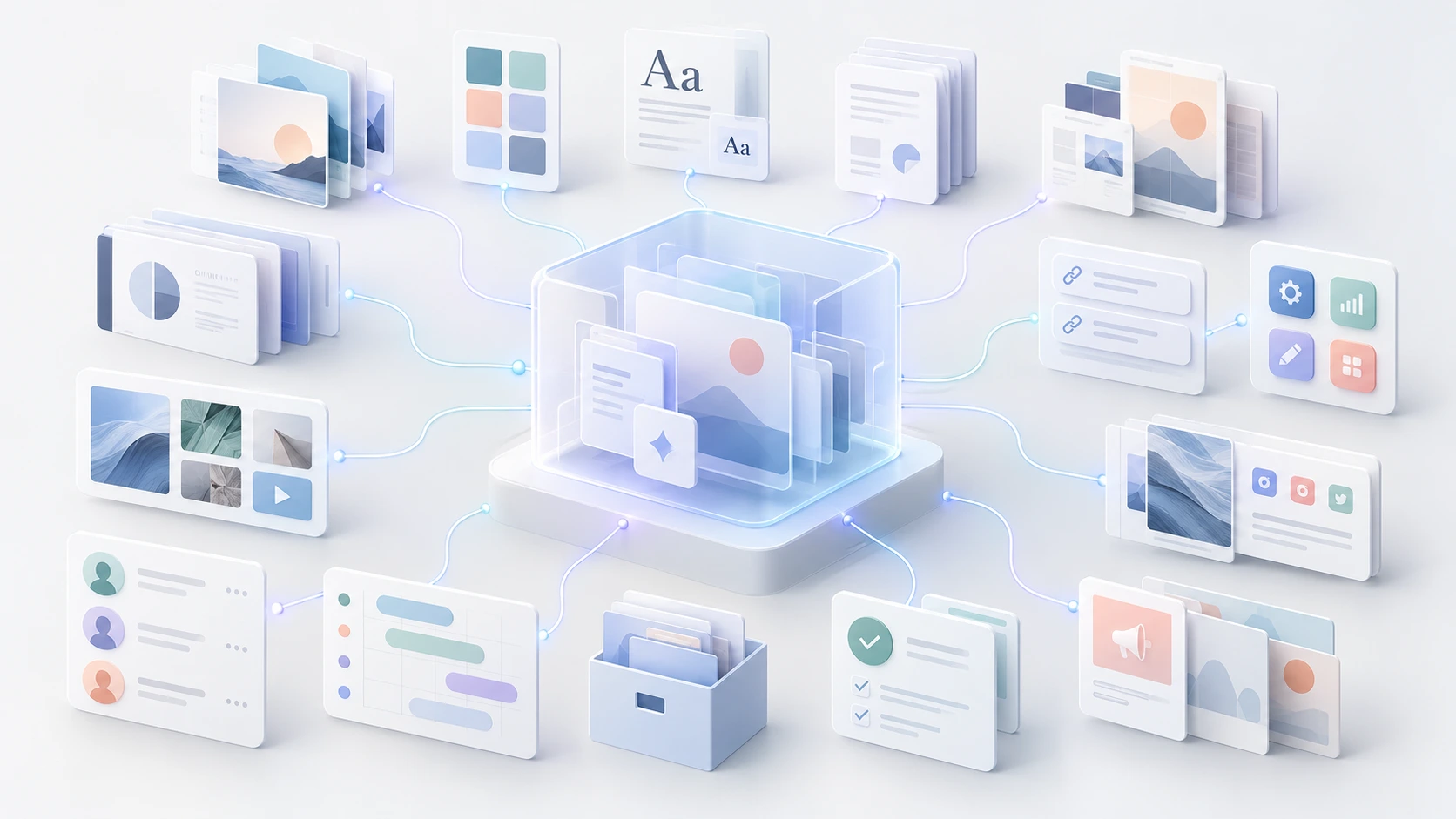
A centralized client brand workspace can bring brand assets, documents, links, and other resources together around each client, making them easier to access without forcing your team to remember where everything is stored.
How Awolan Helps Agencies Find Client Files Faster
Awolan is designed for agencies and teams managing multiple client brands.
Instead of treating every client as another collection of disconnected folders, Awolan gives each brand an organized workspace where your team can manage its assets, documents, links, and digital tools.
So when someone asks:
“Where's the latest logo?”
or:
“Can you find the brand guidelines?”
your team has a clear place to look.
Less searching.
Less asking.
More time spent doing the work that matters.