How Agencies Can Maintain Brand Consistency Across Client Projects

Brand consistency sounds simple in theory.
Use the right logo. Follow the right colors. Stick to the right fonts. Keep the tone consistent.
But for agencies managing multiple clients, maintaining consistency across dozens of campaigns, designers, freelancers, channels, and deliverables can quickly become difficult.
One designer may use an outdated logo.
Another may follow an old set of brand guidelines.
A freelancer may use the wrong color.
A social media team may write in a different tone from the website team.
These small inconsistencies can slowly weaken the way a client brand is presented.
The solution is not more approval meetings.
It is a better system for organizing, accessing, and using brand information consistently.
Why Brand Consistency Becomes Difficult for Agencies
Agencies often work across many touchpoints at the same time.
For one client, you may be producing:
-
Social media content
-
Paid ads
-
Landing pages
-
Presentations
-
Videos
-
Email campaigns
-
Print materials
-
Website updates
-
Sales documents
Different people may work on each piece.
That means brand consistency depends on everyone having access to the same information.
If the latest brand assets and guidelines are difficult to find, inconsistency becomes much more likely.
1. Create a Single Source of Truth for Every Client
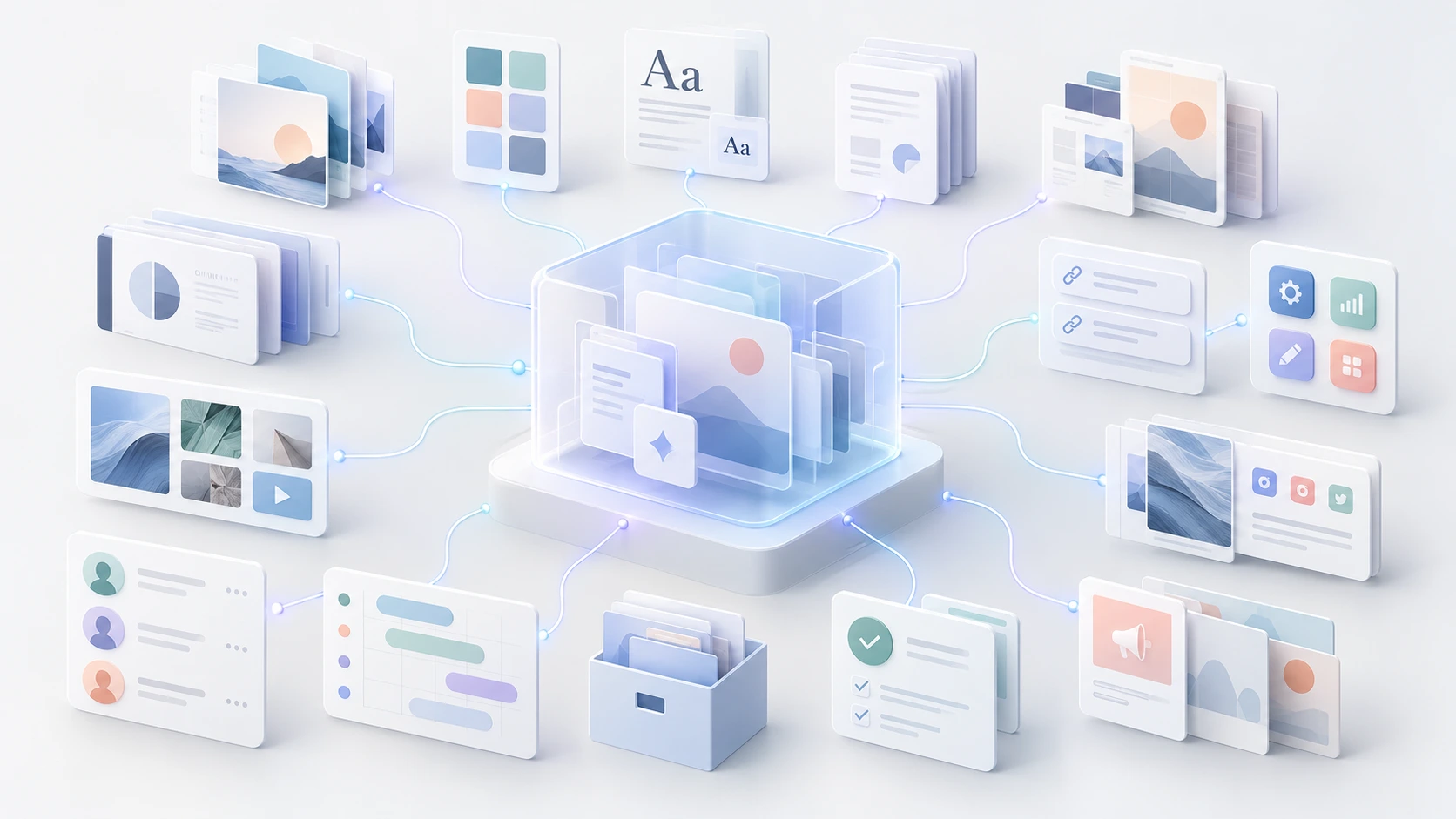
The most important step is to establish one trusted place for each client's brand information.
Your team should know exactly where to find:
-
Approved logos
-
Brand colors
-
Typography
-
Brand guidelines
-
Photography styles
-
Templates
-
Tone of voice guidance
-
Current documents
Instead of searching through email, Slack, cloud folders, and old project files, everyone should have a clear place to start.
A single source of truth removes guesswork.
2. Keep Brand Guidelines Easy to Access
Brand guidelines only work if people actually use them.
If the guidelines are buried five folders deep inside a cloud drive, your team is more likely to make decisions from memory.
Make them one of the most visible resources inside every client workspace.
You can also break important information into easy-to-access sections such as:
Logo
Colors
Typography
Imagery
Tone of Voice
Usage Rules
The easier guidelines are to access, the more likely your team is to follow them.
3. Use Only Approved Brand Assets
One of the most common causes of inconsistency is outdated assets.
A client may have:
logo-final.png
logo-final-new.png
logo-final-approved.png
logo-final-2026.png
That creates unnecessary risk.
Maintain a clearly approved collection of current brand assets and archive old versions separately.
Your team should never have to guess which file is correct.
4. Standardize Client Workspaces
If every client is organized differently, employees have to learn a new system every time they switch accounts.
Instead, use the same structure for every client.
For example:
Client Brand
→ Brand Assets
→ Guidelines
→ Documents
→ Templates
→ Projects
→ Links
→ Tools
This gives your team a predictable way to find brand information.
Consistency in your internal system helps create consistency in your external work.
5. Use Templates for Repeatable Work
Templates can reduce unnecessary creative variation.
For example, agencies can maintain approved templates for:
-
Social media posts
-
Presentations
-
Reports
-
Proposals
-
Email designs
-
Advertising formats
-
Campaign documents
Templates don't mean every piece of work should look identical.
They provide a reliable starting point that already follows the client's brand system.
6. Make Brand Context Available to Everyone
Designers aren't the only people responsible for brand consistency.
Account managers, copywriters, media buyers, developers, social media managers, freelancers, and clients may all influence how the brand is presented.
Give everyone the context they need.
For example, a copywriter should understand the brand voice.
A developer should know the correct colors and typography.
A social media manager should know the visual style and messaging principles.
Brand consistency is a team responsibility.
7. Improve Handoffs Between Team Members
Brand inconsistencies often appear when work moves between people.
A designer completes a campaign.
Another designer takes over later.
A freelancer joins temporarily.
An account manager changes.
If brand knowledge lives mainly in someone's head, every handoff creates risk.
Keep the important brand information connected to the client workspace instead of relying on individuals to explain everything again.
That makes transitions much smoother.
8. Review Work Against the Brand, Not Personal Preference
Creative feedback can easily become subjective.
Instead of:
“I don't like this color.”
use:
“This color isn't part of the approved client palette.”
Instead of:
“This doesn't feel right.”
use:
“This doesn't match the visual direction defined in the brand guidelines.”
Connecting feedback to the brand system helps teams make more consistent decisions.
9. Keep Client Brand Information Updated
Brand systems change over time.
Clients may introduce:
-
New logos
-
Updated colors
-
New typography
-
Revised messaging
-
New templates
-
New guidelines
When that happens, update the central brand workspace immediately.
Otherwise, employees may continue using outdated assets for months.
Regular maintenance is part of maintaining brand consistency.
10. Create a Brand Review Process
For important client work, create a simple brand review before publishing.
The review might check:
Logo — correct version and placement?
Colors — approved palette?
Typography — correct fonts and hierarchy?
Imagery — aligned with the brand style?
Tone — consistent with the client's voice?
Assets — latest approved versions?
This doesn't need to become a complicated approval process.
A simple checklist can catch many inconsistencies before the client sees them.
Brand Consistency Starts With Organization
It is easy to think brand consistency is purely a design problem.
It isn't.
It is also an information management problem.
If people can't find the right logo, guidelines, colors, templates, or documents, maintaining consistency becomes much harder.
A well-organized system gives the whole team access to the same source of truth.
That makes it easier to create consistent work across projects, channels, and team members.
How Awolan Helps Agencies Maintain Brand Consistency
Awolan is designed for teams and agencies managing multiple client brands.
Each client can have a dedicated brand workspace containing the assets, documents, guidelines, links, and digital tools the team needs.
Instead of relying on scattered folders or asking another team member for the latest file, everyone can start with the client brand and access the same approved resources.
That helps reduce:
-
Outdated assets
-
Wrong brand files
-
Inconsistent resources
-
Unnecessary searching
-
Confusion during handoffs
And it gives every person working on the account a clearer understanding of the brand.
Consistency Becomes Easier When Everyone Works From the Same Source
The more projects an agency manages, the harder it becomes to maintain consistency manually.
The answer is not more complexity.
It is better organization.
Give every client brand a clear home.
Give every team member access to the right resources.
And make the correct brand information the easiest information to find.
Every client. Every brand. One place.