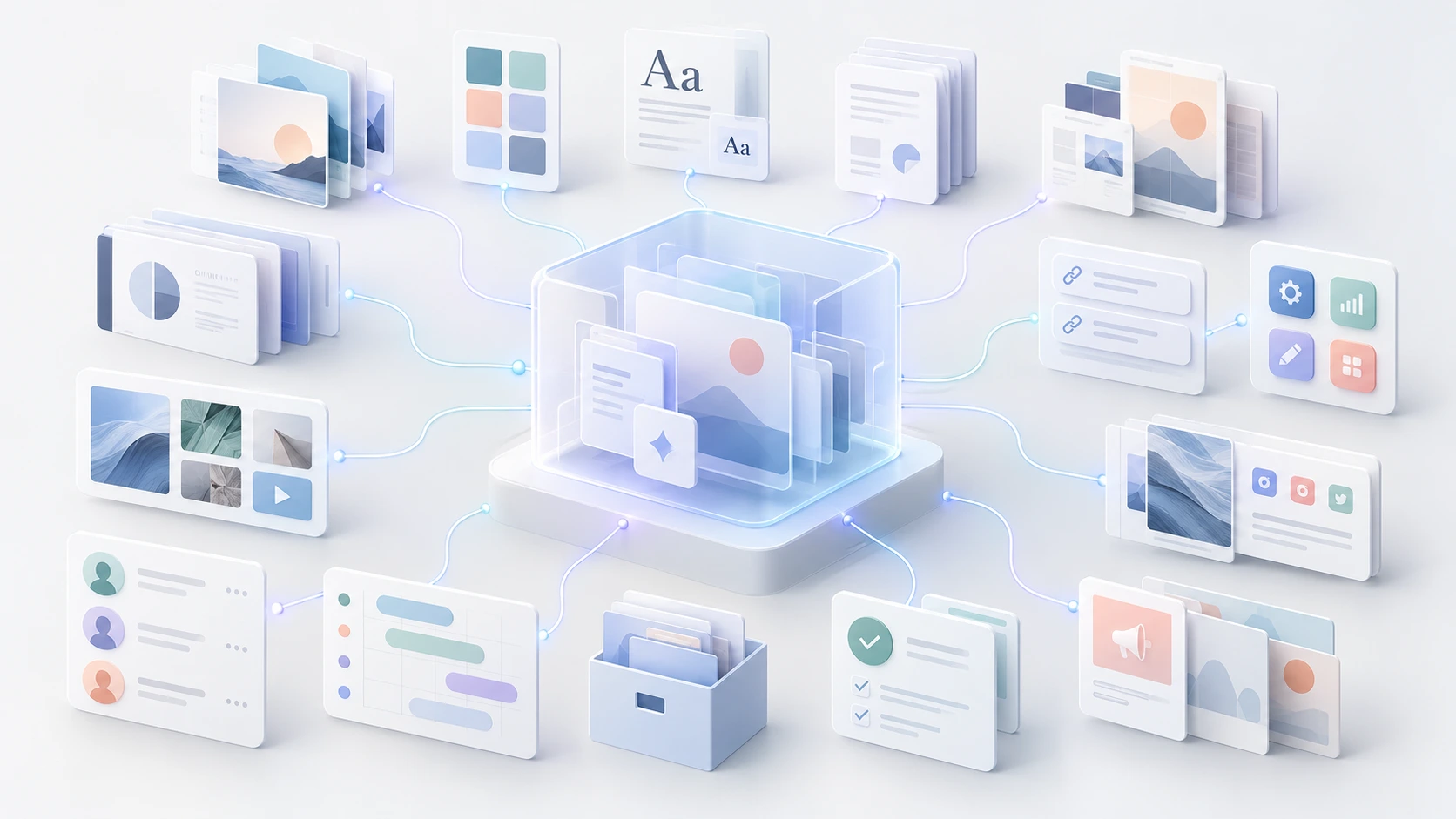
Best Tools for Organizing Brand Assets
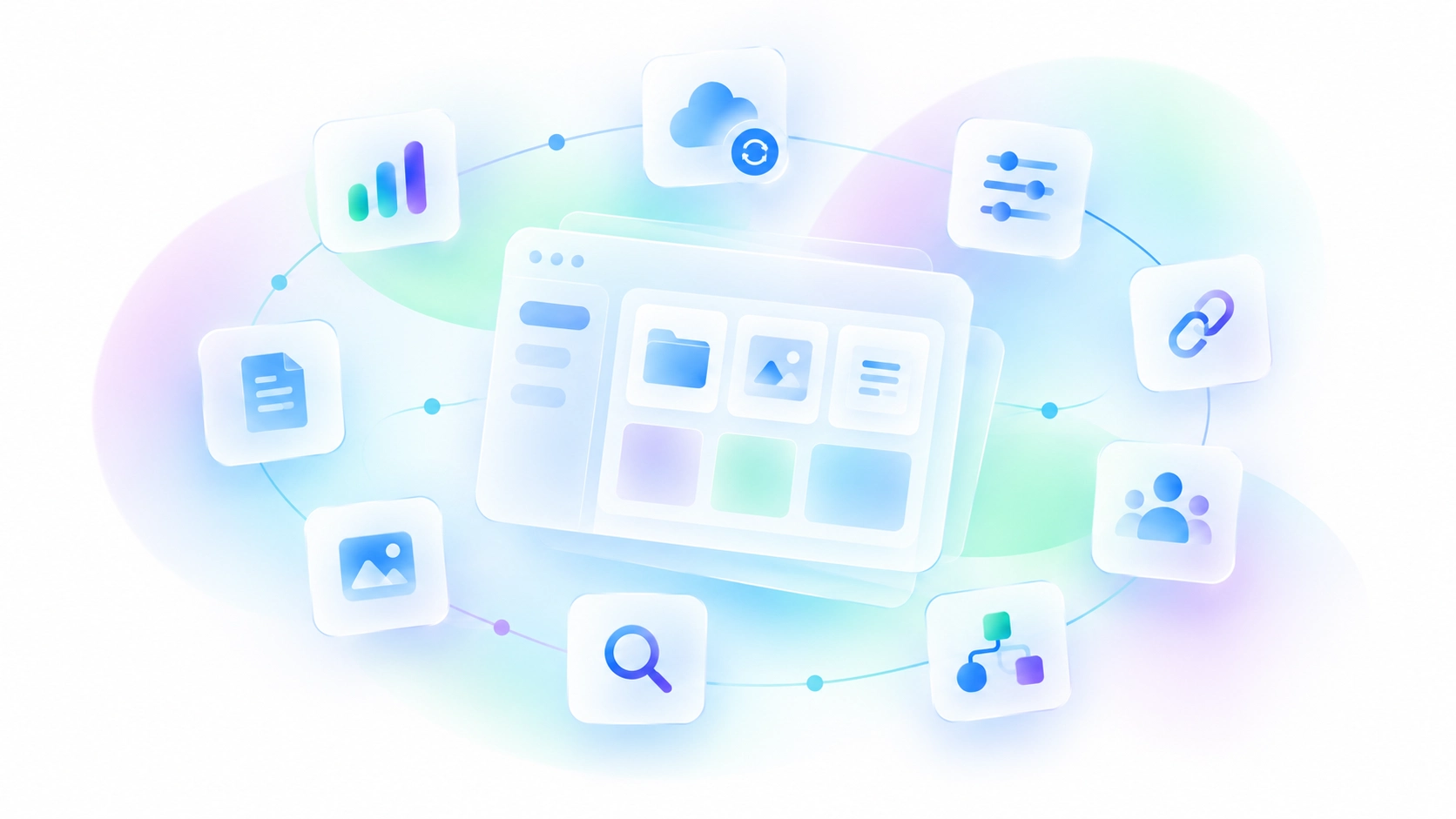
Brand assets can become messy surprisingly quickly.
A logo starts in Google Drive. Brand guidelines are sent through email. Campaign files live in Dropbox. Social templates are in Figma. Someone saves the latest presentation on their laptop.
For agencies managing multiple client brands, that problem grows even faster.
The right brand asset management tool can help your team keep logos, images, videos, guidelines, documents, and other resources organized and easy to find.
But not every team needs the same kind of platform.
Some need simple cloud storage.
Others need a full Digital Asset Management platform.
And agencies may need something built around managing multiple client brands, not just storing files.
Here are some of the best tools to consider.
1. Awolan — Best for Agencies Managing Multiple Client Brands
Awolan is designed for teams and agencies that need to organize the complete digital environment around each client brand.
Instead of treating a client as another folder full of files, Awolan gives each brand a dedicated workspace for:
-
Brand assets
-
Documents and files
-
Important links
-
Digital tools
-
Brand guidelines
-
Team access
This makes it particularly useful when an agency is managing several clients at the same time.
Your team can start with the client brand and find the resources connected to it instead of remembering which application or folder contains everything.
Awolan describes itself as a centralized client brand hub rather than a generic drive or task management platform.
Best for
Marketing agencies, creative teams, freelancers, and teams managing multiple client brands.
Why it stands out
It organizes more than assets.
It organizes the broader client brand ecosystem.
2. Frontify — Best for Brand Guidelines and Brand Governance
Frontify combines Digital Asset Management with interactive brand guidelines, templates, portals, and brand governance tools.
It is particularly useful for larger organizations that need to ensure teams, partners, and regional offices are working from the same standards.
Frontify can help organizations:
-
Manage approved assets
-
Publish brand guidelines
-
Create branded templates
-
Control access
-
Build portals for different audiences
-
Maintain consistency across markets
It also supports regional or partner-specific portals with different permissions and localized brand resources.
Best for
Large brand teams, global companies, and organizations with strong brand governance requirements.
Why it stands out
It combines brand guidelines and asset management particularly well.
3. Brandfolder — Best for Large Brand Asset Libraries
Brandfolder is a dedicated Digital Asset Management platform built to help teams organize, search, distribute, and measure digital assets.
Its organizational features include collections, sections, labels, metadata, search, and AI-assisted asset discovery.
This makes it useful for organizations managing a large number of:
-
Images
-
Videos
-
Documents
-
Creative files
-
Marketing assets
-
Product content
Brandfolder also includes tools for sharing assets and understanding how assets are being used.
Best for
Established marketing teams and enterprises with large asset libraries.
Why it stands out
Powerful search and structured asset management for high-volume libraries.
4. Bynder — Best for Enterprise Digital Asset Management
Bynder is another well-established DAM platform focused on storing, managing, finding, and distributing brand, campaign, and product assets.
It also offers collaborative workflow capabilities for reviewing, proofing, approving, and versioning creative assets.
That makes it useful when asset management is connected to a more complex content production process.
Best for
Enterprise organizations and large marketing departments.
Why it stands out
Strong DAM capabilities combined with creative workflow management.
5. Air — Best for Visual Creative Teams
Air takes a more visual approach to Digital Asset Management.
Its platform is designed for creative and marketing teams and includes storage, visual browsing, asset previews, approvals, search, metadata, version management, and imports from platforms such as Google Drive, Dropbox, and Box.
Air can be particularly useful for teams working heavily with:
-
Photography
-
Video
-
Campaign creative
-
Social content
-
Design assets
Its visual workspace can make creative libraries easier to browse than a traditional folder structure.
Best for
Creative studios, content teams, social teams, and visual-heavy marketing departments.
Why it stands out
A visually oriented experience built around creative assets and approvals.
6. Canto — Best for Searchable Asset Libraries
Canto provides a centralized, searchable library for digital assets.
Its organization tools include folders, albums, custom metadata, filters, search, and AI-powered smart tagging.
This can be useful when your biggest challenge is having a large number of assets and needing a faster way to discover the correct files.
Best for
Marketing and creative teams that need structured search and metadata.
Why it stands out
Simple asset organization combined with powerful search features.
7. Google Drive — Best for Simple, Familiar File Storage
Not every business needs a specialized brand management platform.
Google Drive can still be a practical option for smaller teams if you maintain a consistent folder structure.
Google Workspace Shared Drives allow files to belong to the team rather than an individual employee, meaning the files remain available even when someone leaves the organization.
A basic structure could look like:
Clients
→ Client A
→ Logos
→ Guidelines
→ Images
→ Templates
→ Campaigns
→ Client B
→ Logos
→ Guidelines
→ Images
→ Templates
→ Campaigns
Best for
Small teams with relatively simple asset requirements.
Why it stands out
Most teams already understand how to use it.
8. Dropbox — Best for Straightforward File Organization and Sharing
Dropbox is another practical option when your main requirement is storing, organizing, and sharing brand files.
Dropbox team spaces and team folders provide shared structures for organizing team content, while administrators can control access and manage folder structures.
Dropbox also recommends consistent folder structures, naming conventions, and tags to make files easier to locate.
For brand and marketing assets specifically, Dropbox supports workflows around approved files, permissions, folder structures, and external partners.
Best for
Teams that primarily need reliable cloud storage and sharing.
Why it stands out
Simple, familiar file management with strong collaboration capabilities.
Which Brand Asset Management Tool Should You Choose?
The answer depends on what you're actually trying to organize.
If you manage multiple client brands
Look for a platform like Awolan that organizes resources around each client's brand rather than simply creating another storage library.
If you need strong brand guidelines
Frontify is worth considering.
If you manage thousands of assets
A dedicated DAM such as Brandfolder, Bynder, or Canto may make more sense.
If your team works heavily with visual content
Air can provide a more visual asset-management experience.
If you mainly need file storage
Google Drive or Dropbox may be enough.
The important thing is not choosing the tool with the most features.
Choose the tool that solves your team's actual organizational problem.
Brand Asset Organization Is More Than Storage
Many teams think the solution to scattered brand assets is simply creating more folders.
But good brand asset organization should answer questions like:
Where is the approved logo?
Which guidelines are current?
Where are the client's documents?
Which tools does this brand use?
Who has access?
Where can I find everything related to this client?
If your existing system can't answer those questions quickly, you may need more than cloud storage.
You may need a structured brand workspace.
How Awolan Approaches Brand Asset Organization
Awolan is built around a