Best Brand Asset Management Software for Agencies
Agencies manage brand assets differently from in-house teams.
You are not organizing one brand.
You may be managing ten, twenty, or fifty client brands at the same time.
Each client can have its own logos, guidelines, images, videos, templates, documents, campaigns, and digital tools.
That means the best brand asset management software for agencies needs to do more than store files.
It should help your team:
- Keep client brands separate
- Find approved assets quickly
- Give freelancers and clients the right access
- Maintain brand consistency
- Handle handoffs between team members
- Reduce time spent searching
- Scale as the number of clients grows
Here are some of the best options to consider in 2026.
1. Awolan
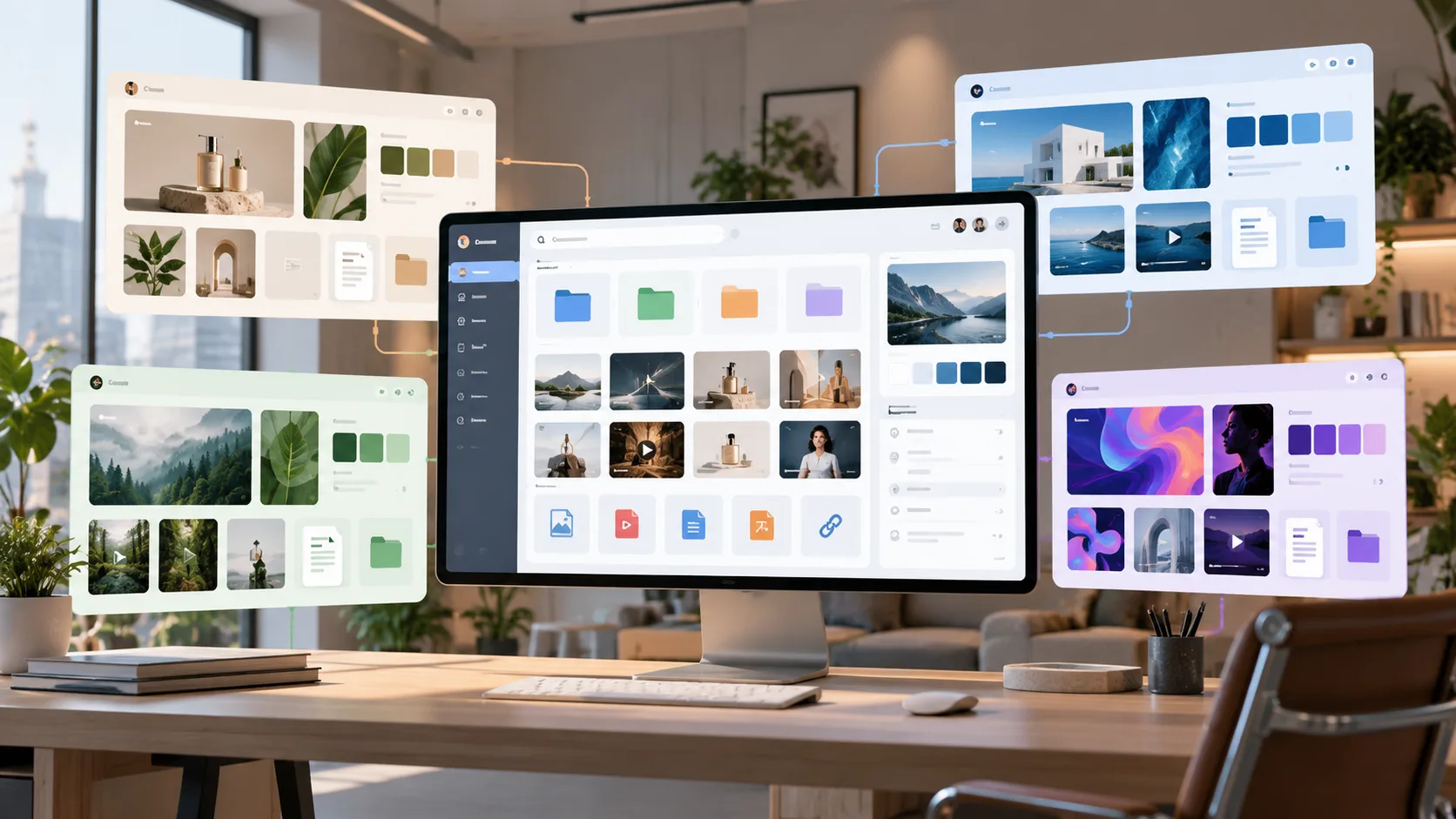
Awolan is designed around a problem agencies deal with every day: managing multiple client brands in one place.
Rather than treating every client as another folder, Awolan gives each brand its own centralized workspace.
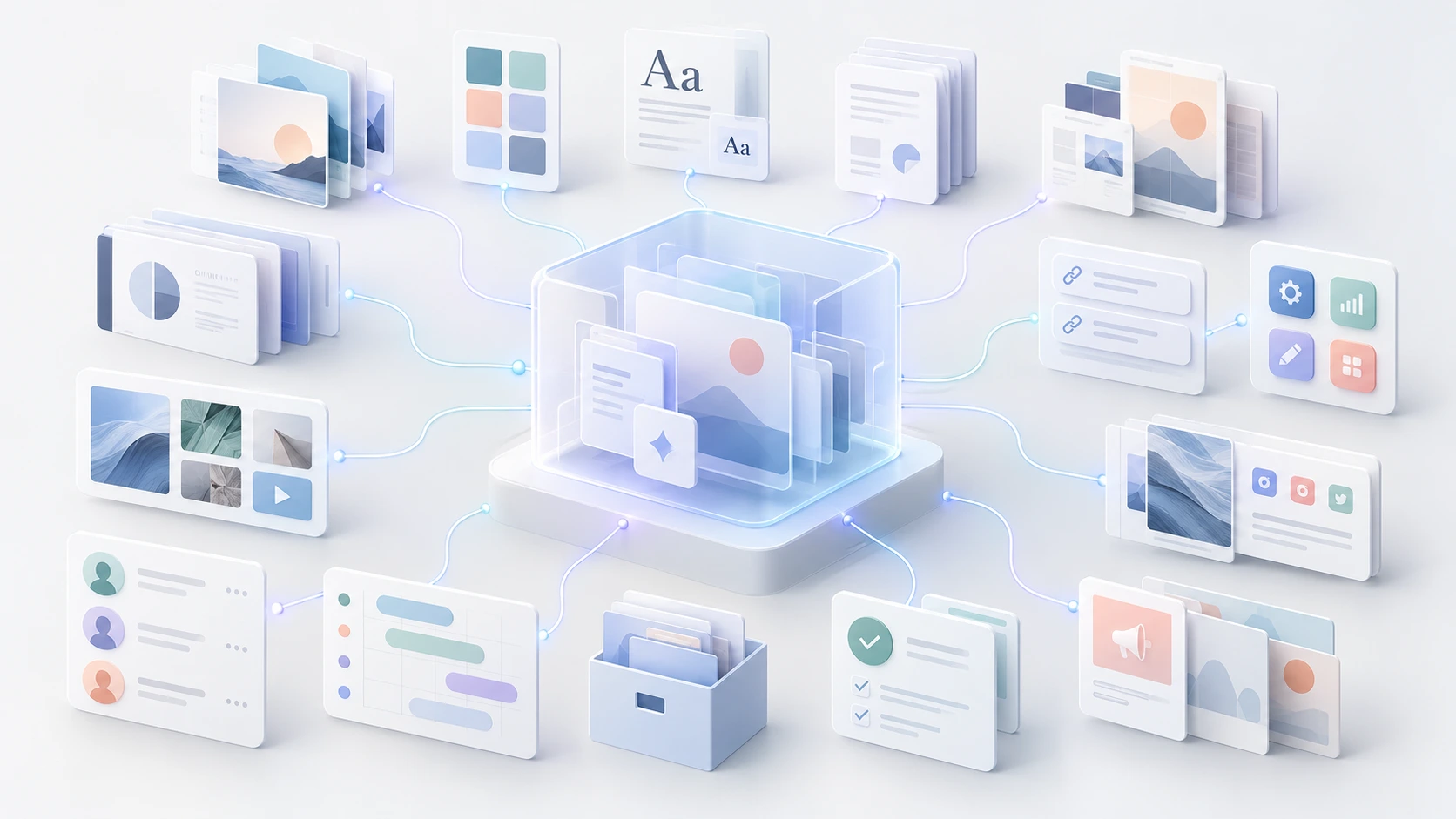
Teams can organize:
- Brand assets
- Documents and files
- Important links
- Digital tools
- Brand information
This makes Awolan particularly useful for agencies that do not necessarily need a large enterprise DAM, but do need a clearer way to manage the entire digital environment around each client.
Best for
Creative agencies, marketing agencies, freelancers, and teams managing multiple client brands.
Why agencies may prefer it
The structure starts with the client brand, rather than one large asset library.
That can make it easier for account managers, designers, marketers, and other team members to move between clients without searching through unrelated folders.
2. Air
Air is a digital asset management and creative operations platform aimed at creative and marketing teams.
Its workflow goes beyond file storage by combining asset organization with review, approval, versioning, and collaboration. Air also emphasizes visual search and creative feedback directly around the asset.
For agencies, this can be useful when many people are involved in producing, reviewing, and approving creative work.
Air specifically highlights agency use cases involving rotating clients, freelancers, and per-client workspaces.
Best for
Agencies with active creative production, frequent approvals, and external collaborators.
Useful features
- Visual asset libraries
- Review and approval workflows
- Version management
- Search and metadata
- External sharing
- Creative feedback
3. Frontify
Frontify combines digital asset management with brand guidelines, templates, permissions, and brand governance.
This makes it especially useful when an agency needs to do more than organize files.
Teams can connect approved assets directly with the rules explaining how those assets should be used. Frontify also supports multi-brand structures and granular access controls.
Frontify is generally positioned toward larger organizations and complex brand environments, so it may be more than a small agency needs.
Best for
Large agencies, global agency networks, and teams working with complex brand governance.
Useful features
- Digital asset management
- Online brand guidelines
- Brand templates
- Permissions
- Version control
- Multi-brand management
- Brand governance
4. Brandfolder
Brandfolder is a dedicated DAM platform focused on organizing, distributing, and sharing brand assets.
It is particularly useful when teams need structured libraries and self-service access to approved creative files.
Brandfolder is also designed for large asset collections and external asset distribution, making it useful for agencies that frequently share resources with clients, partners, or external teams.
Best for
Agencies that need a traditional DAM with strong asset distribution and brand portals.
Useful features
- Centralized asset libraries
- Brand portals
- Search and metadata
- External asset sharing
- Integrations
- Asset distribution
5. Canto
Canto provides a centralized digital asset library for marketing and creative teams.
Its current platform includes AI-powered search, Smart Tags, visual search, workflows, approval tools, brand templates, Style Guides, and branded portals.
That makes it a practical middle ground for agencies that want more structure than cloud storage without moving into an extremely complex enterprise platform.
Best for
Small to mid-sized agencies that need a straightforward DAM.
Useful features
- AI-powered asset search
- Smart Tags
- Approval workflows
- Brand portals
- Brand templates
- Style Guides
- Asset permissions
Canto has also continued expanding its AI-assisted asset management capabilities during 2026.
6. Bynder
Bynder is an established enterprise DAM platform designed for organizations managing large quantities of digital content.
It is generally better suited to agencies or agency networks with more complex requirements around workflows, permissions, distribution, and brand governance.
For a small agency managing a handful of clients, it may be more system than necessary.
For larger organizations managing thousands of assets across regions or teams, those advanced capabilities can become much more valuable. Current DAM comparisons continue to position Bynder toward large-scale content operations and brand consistency.
Best for
Enterprise agencies and large organizations with complex asset libraries.
Useful features
- Advanced DAM
- Metadata and taxonomy
- Workflow management
- Brand portals
- Permissions
- Asset distribution
- Enterprise integrations
Which Brand Asset Management Software Is Right for Your Agency?
There is no single best option for every agency.
The right choice depends on the problem you are trying to solve.
If your main problem is managing multiple client brands
A client-centered workspace such as Awolan may make more sense than a traditional enterprise DAM.
If your team spends a lot of time reviewing creative work
Air is worth considering because of its collaboration and approval workflows.
If brand governance is critical
Frontify combines assets, guidelines, templates, and governance in one environment.
If you need a traditional DAM
Brandfolder or Canto can provide structured asset libraries and sharing.
If your agency operates at enterprise scale
Platforms such as Bynder or Frontify are designed for more complex asset management environments.
What Should Agencies Look for in Brand Asset Management Software?
Before choosing a platform, look beyond the feature list.
Think about how your agency actually works.
A useful system should make it easy to answer:
Can we create a separate space for every client?
Can our team find the correct asset quickly?
Can freelancers access only what they need?
Can we clearly separate current assets from old versions?
Can clients access approved resources without asking us?
Can we organize more than just files?
Will the system still work when we double the number of clients?
These questions are often more useful than comparing dozens of small features.
DAM vs Client Brand Workspace
It is also worth understanding that a traditional DAM and a client brand workspace solve slightly different problems.
A DAM is usually centered around the asset library.
Assets → Search → Metadata → Distribution
A client brand workspace starts with the client.
Client → Brand → Assets + Documents + Links + Tools
For agencies, that difference can matter.
You may not have millions of assets.
You may simply need a better way to keep twenty different brands organized.
Do You Really Need a DAM?
Not every agency does.
If your biggest challenge is advanced metadata, asset rights, large media libraries, and global distribution, a DAM can be valuable.
But if your biggest problem is:
“Where is everything related to this client?”
then a simpler client-centered workspace may be a better fit.
The goal is not to buy the most powerful software.
It is to remove friction from the way your team manages client brands.
A Better System Should Make Agency Work Simpler
The best brand asset management software should help your team spend less time looking for things.
The right logo should be easy to find.
The current guidelines should be obvious.
The client’s documents should have a clear home.
Important links and tools should not be buried in chat.
And when someone new joins the project, they should not need another employee to explain where everything is.
That is ultimately what good brand asset management should achieve.
For agencies, the best system is the one that keeps every client organized while making everyday work easier for the people managing those brands.
Every client. Every brand. One place.